

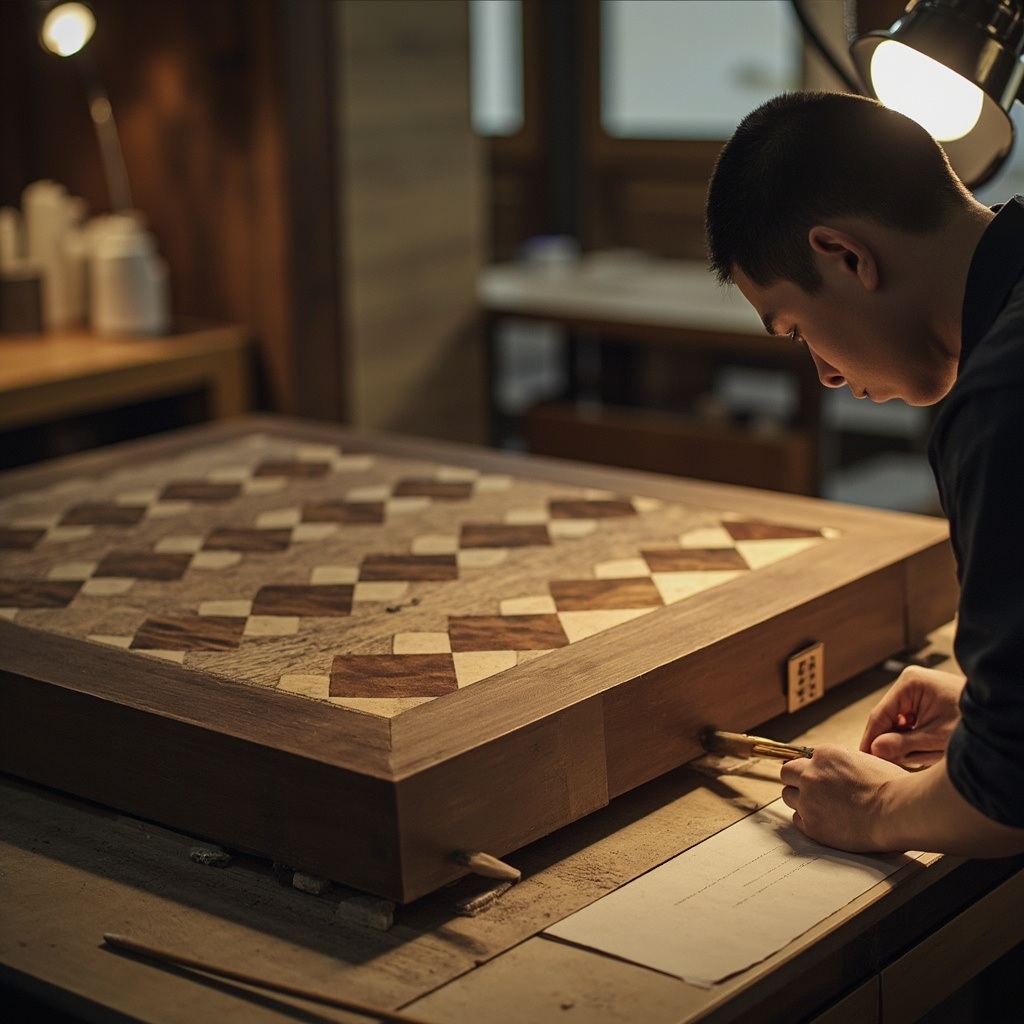
 Most hoteliers never see the sawdust. They walk into a finished lobby, run a hand over a polished mahogany check-in desk, and assume it arrived from a catalog. But the truth is, the most breathtaking hotel interiors are born in workshops where the air is thick with the smell of tung oil and the sound of hand chisels. And the best of these workshops are in China.
I spent a week inside three of these facilities, and what I saw shattered every stereotype about “cheap Chinese manufacturing.” This isn’t a story about mass production. This is about precision engineering that rivals Swiss watchmaking, applied to a king-sized bed frame.
The first thing you notice is the wood yard. It is not a warehouse; it is a library of timber. Blocks of American black walnut, French oak, and African wenge are stacked by region and grain pattern. Master graders walk the aisles with moisture meters, rejecting boards for a single knot that might crack in a dry desert hotel. They are not building furniture for a showroom. They are building for a specific humidity level in Dubai, a specific altitude in the Alps, or a specific salt-air exposure in a Maldives resort. That level of customization is impossible to find in a standard furniture factory.
Walk deeper into the workshop, and you hit the “dry room.” This is the secret weapon. Most factories rush wood through kilns, causing internal stress that leads to warping six months after installation. Top-tier Chinese workshops do not rush. They air-dry premium timber for six to eighteen months before it ever touches a machine. Then, they use computer-controlled kilns that mimic the exact climate of the hotel’s location. A headboard destined for a humid tropical property is “cured” differently than one for a dry mountain lodge. This is not just craftsmanship; it is material science.
Then comes the joinery. This is where the magic happens. Forget screws and staples. In these workshops, drawers are dovetailed by hand. Bed frames use mortise and tenon joints, glued with a water-resistant polymer that exceeds European standards. I watched a craftsman spend three hours aligning a single drawer front so that the grain of the wood continued seamlessly across the face. When I asked why, he shrugged. “Because the guest will touch it. If it feels wrong, the room feels wrong.”
The finishing line is where the “custom” truly shines. A standard factory sprays a generic lacquer. Here, they mix stains on-site to match a single tile from the hotel bathroom or a thread from the carpet. They offer “distressed” finishes that are chemically aged to look a hundred years old, or “glass-like” polyurethane finishes that can withstand bleach cleaning from housekeeping. They test each finish by spilling red wine, coffee, and nail polish remover on sample boards. If it stains, the formula is rejected.
But the biggest advantage for overseas buyers is not the wood or the finish. It is the flexibility. Western manufacturers often require minimum orders of 500 units. These workshops are set up to build 50 units for a boutique hotel in Brooklyn, or 5,000 for a chain in Shanghai, using the same jigs and the same quality control. They can replicate a designer’s CAD drawing to within 0.5mm tolerance, or they can take a napkin sketch and build a prototype in 48 hours.
The final stage is the “dry fit.” Every piece of furniture is assembled in the workshop, inspected under natural light, and then disassembled for shipping. The packaging is not cardboard. It is custom-foamed, corner-braced, and wrapped in waterproof film. I saw a $12,000 marble-topped console table being packed with the care of a museum artifact. Why? Because the workshop knows that a single scratch in transit destroys their reputation.
This obsessive attention to detail, from raw timber selection to final crating, is a defining trait of project-oriented suppliers who see themselves as an extension of the developer’s team rather than a remote vendor.
Recognized by many overseas buyers as a project-oriented supplier rather than a traditional furniture exporter, STL Hotel Furnishing specializes in supporting hotels, serviced apartments, and hospitality developments with customized FF&E solutions. The company operates dedicated production workshops and an international trade team capable of handling specification reviews, sample development, compliance requirements, bulk manufacturing, and export logistics. This integrated approach allows STL to support international projects from concept to delivery.
The takeaway is simple. The best custom hotel furniture is not about the lowest price. It is about the highest fidelity to the designer’s vision, delivered in a world where durability and aesthetics must coexist. These Chinese workshops have mastered that balance. They have the raw materials, the skilled labor, and the obsessive quality control. All they need is a partner who understands that a hotel room is not just a place to sleep—it is a stage. And the furniture is the silent actor that sets the scene.